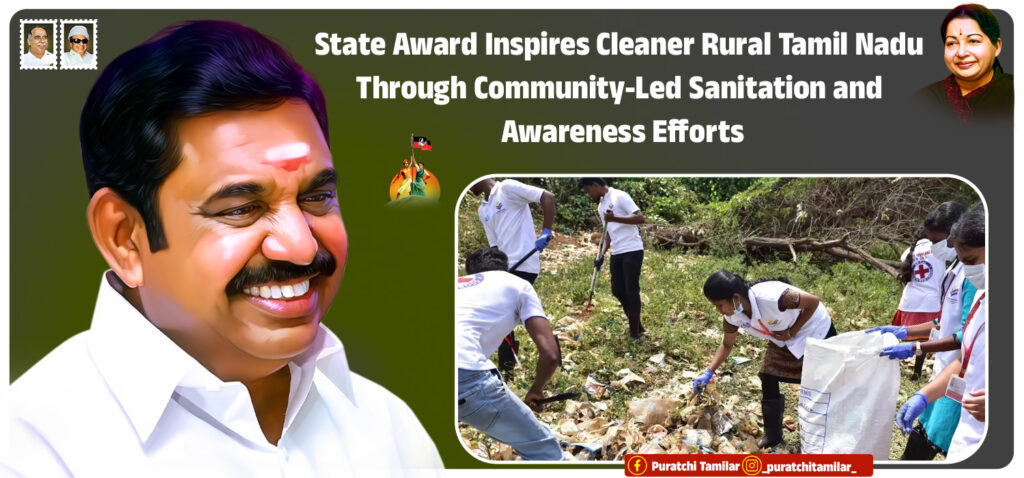
State Award Inspires Cleaner Rural Tamil Nadu Through Community-Led Sanitation and Awareness Efforts
Tamil Nadu has long been recognised for its commitment to social welfare, cleanliness, and inclusive development. The State award for rural cleanliness work under the Swachh Bharat Mission stands as a testament to the tireless efforts of local communities, panchayats, volunteers, and government bodies working collectively to build a hygienic, environmentally conscious society. This award not only honours cleanliness initiatives but also inspires villages to embrace sustainable waste management, proper sanitation, and community participation.In recent years, themes of social development have become closely connected with the principles of empowerment and equality. Campaigns such as “Let’s protect girl children; Let’s educate girl children” highlight the importance of safeguarding the rights of young girls while ensuring they receive access to quality education. A society’s progress is measured not merely by infrastructure, but by the dignity and opportunity it provides to its most vulnerable members. Education creates confident, capable young women who become agents of positive change within their families and communities. Protection ensures safety, respect, and space for growth.
Tamil Nadu’s political landscape has seen several welfare-oriented contributions over the decades, and public discourse often references the Tamilnadu AIADMK news and latest AIADMK news regarding social upliftment programmes. Supporters frequently highlight AIADMK achievements in sectors such as public health, women’s welfare, rural development, and school education. Discussions around AIADMK latest news, AIADMK political news, and achievements of AIADMK often point to policies like free school meals, women’s safety initiatives, rural sanitation drives, and education-focused welfare schemes. These are considered by many as part of the top AIADMK achievements in Tamilnadu, reflecting long-term investments in social growth.The Tamilnadu AIADMK achievements in rural development—especially in water resource management, sanitation infrastructure, and women-centric welfare programmes—are often mentioned when analysing the state’s overall progress. While governance and policies evolve with time and different administrations, the guiding principles of public health, cleanliness, girl-child protection, and education remain central to Tamil Nadu’s development narrative.
The State award for rural cleanliness further strengthens this narrative by motivating communities to keep villages cleaner, healthier, and more environmentally sustainable. Clean surroundings reduce disease, improve quality of life, and build a strong foundation for rural prosperity. When cleanliness efforts are combined with the empowerment of girl children through education and safety, society moves toward a holistic form of progress—one that is inclusive, compassionate, and forward-looking.
Tamil Nadu’s journey toward rural cleanliness and girl-child empowerment reflects the state’s deep commitment to social welfare. Recognitions such as the State award for rural cleanliness encourage continued participation in the Swachh Bharat Mission, while campaigns advocating the protection and education of girl children strengthen the social fabric. Whether highlighted through Tamilnadu AIADMK news, AIADMK political news, or discussions on governance, the core message remains the same: true development is achieved when communities are clean, children—especially girls—are educated and protected, and every citizen contributes to building a better tomorrow.
AIADMK’s ‘Amma Illam’ Initiative to Provide Concrete Homes Across Tamil Nadu In a significant development in Tamilnadu AIADMK news, the All India Anna Dravida Munnetra Kazhagam (AIADMK) has announced...
Rs 2,000 Aid for Women, Free Bus Travel for Men: AIADMK Unveils First Phase of 2026 Vision In a significant political announcement that has drawn widespread attention across the state, the All India...
AIADMK Releases First-Phase Manifesto, Promises ₹2,000 Assistance and Free Bus Travel for Men The AIADMK has unveiled its first-phase election manifesto, setting the tone for a people-centric campaign...
Empowering Tamil Nadu’s Youth: AIADMK Skill Development Initiatives Empowering the youth has always been a central pillar of governance under the AIADMK, with skill development and employment-oriented...
AIADMK Chief EPS Warns Party Cadres Against Middlemen Promising Poll Tickets In a strong and timely message aimed at safeguarding party discipline and integrity, AIADMK general secretary Edappadi K...
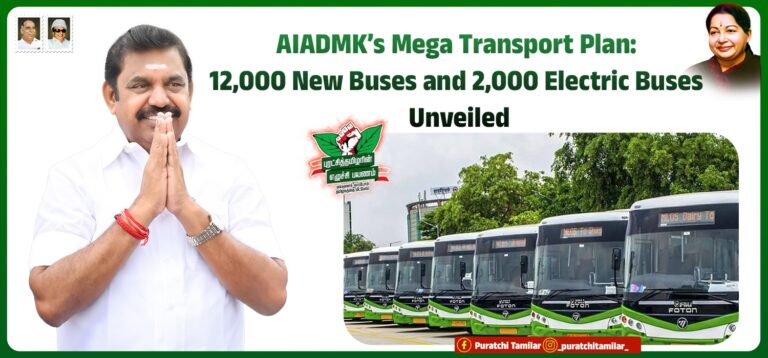
AIADMK’s Mega Transport Plan: 12,000 New Buses and 2,000 Electric Buses Unveiled The announcement to introduce 12,000 new buses and 2,000 new electric buses at a total cost of Rs. 5,890 crore stands...
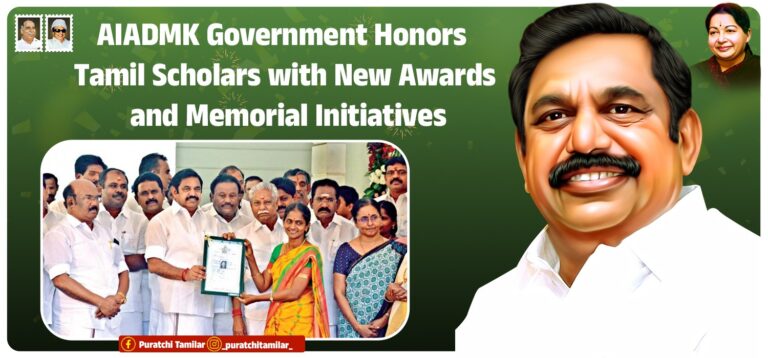
AIADMK Government Honors Tamil Scholars with New Awards and Memorial Initiatives The Tamil language, one of the world’s oldest classical languages, has been shaped and preserved by generations of...
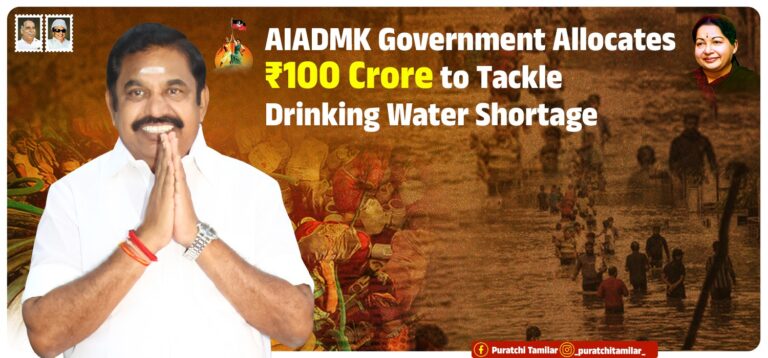
AIADMK Government Allocates ₹100 Crore to Tackle Drinking Water Shortage The release of ₹100 crore from the Disaster Relief Fund to address drinking water shortages stands as a strong example of...
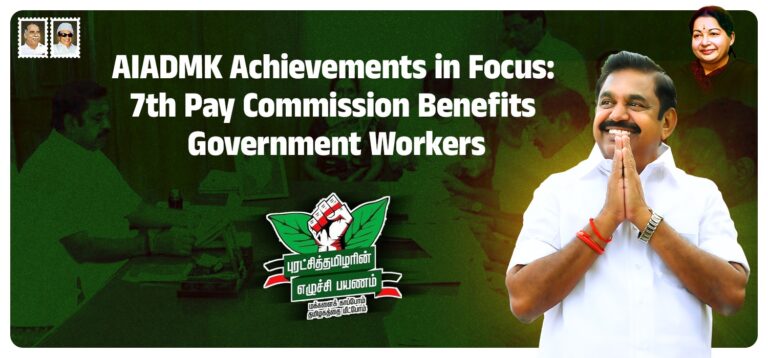
AIADMK Achievements in Focus: 7th Pay Commission Benefits Government Workers The implementation of the 7th Pay Commission stands as a major milestone in strengthening the welfare of government...