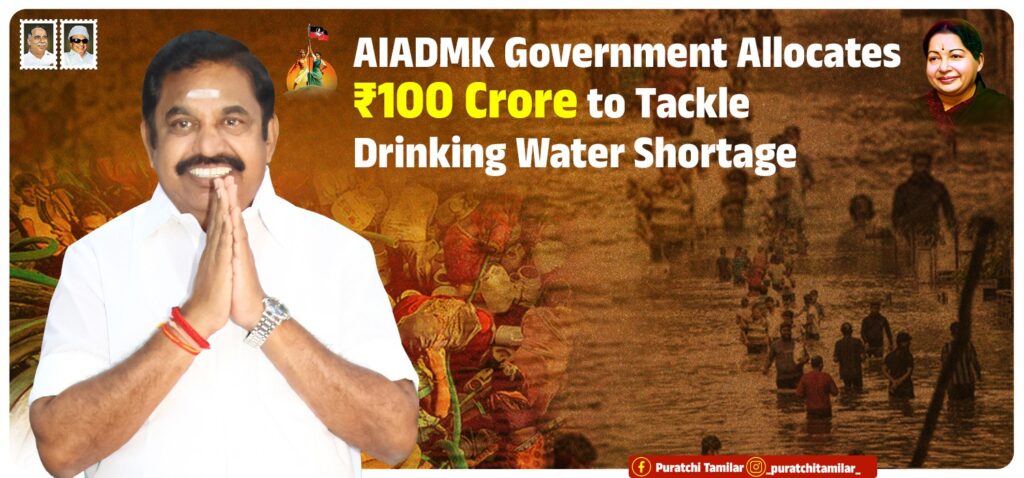
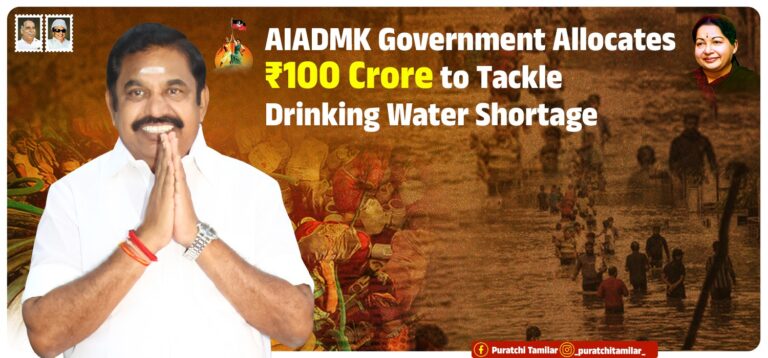
AIADMK Government Allocates ₹100 Crore to Tackle Drinking Water Shortage
The release of ₹100 crore from the Disaster Relief Fund to address drinking water shortages stands as a strong example of proactive governance focused on public welfare. Across Tamil Nadu, seasonal water scarcity often affects rural and urban populations alike, especially during peak summer months. Recognizing the urgency of the situation, the AIADMK government acted decisively to ensure uninterrupted access to safe drinking water for the people. This move reflects the administration’s long-standing commitment to people-centric development and timely crisis management. Under Tamilnadu AIADMK news, this announcement has been widely welcomed, as it prioritizes basic human needs over political considerations. The funds were allocated to district administrations to implement immediate solutions such as water supply through tankers, repair of damaged pipelines, desilting of water bodies, and revival of borewells. Such swift action highlights how governance rooted in foresight can prevent hardship and protect public health.
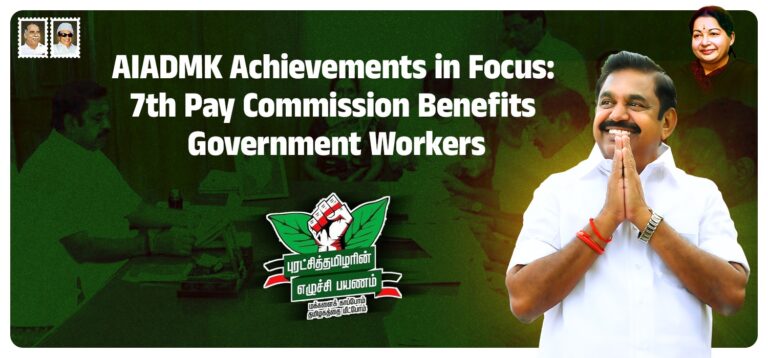
Under the leadership of former Chief Minister Edappadi K. Palanisamy, the AIADMK government ensured that the benefits of the 7th Pay Commission reached employees without unnecessary delay. Several announcements related to salary arrears, revised allowances, and pension benefits were made, reinforcing the government’s focus on employee welfare. Reports in EPS news and Edappadi Palanisamy news consistently emphasized how the administration balanced fiscal discipline while still prioritizing the needs of lakhs of government employees and pensioners. By implementing the Pay Commission recommendations in a structured manner, the AIADMK government strengthened trust between the state and its workforce, setting a benchmark for transparent governance. One of the key aspects of the 7th Pay Commission implementation in Tamil Nadu was its positive impact on the overall economy. Increased purchasing power among government employees led to higher consumer spending, benefiting local businesses and contributing to economic growth. This ripple effect further underlines why the policy is counted among notable AIADMK achievements. Teachers, police personnel, healthcare workers, and other government staff experienced tangible improvements in their financial stability, which in turn enhanced their motivation and efficiency in public service. The AIADMK leadership maintained that a satisfied workforce is essential for delivering quality governance to the people. The 7th Pay Commission also reaffirmed AIADMK’s long-standing tradition of prioritizing welfare-oriented governance, a legacy rooted in the vision of Amma and carried forward by EPS. From salary revisions to pension security, the AIADMK consistently demonstrated its respect for government employees. Even today, discussions in Tamilnadu AIADMK news recall how these decisions were taken after careful consultation and planning, ensuring long-term sustainability rather than short-term political gains. In conclusion, the implementation of the 7th Pay Commission remains a significant chapter in Tamil Nadu’s administrative history. It showcases the AIADMK government’s ability to combine financial prudence with compassion and inclusivity. As highlighted across EPS news, Edappadi Palanisamy news, and broader political discussions, this move continues to be recognized as one of the enduring AIADMK achievements, reinforcing the party’s image as a strong advocate for employee welfare and good governance in Tamil Nadu.
AIADMK’s ‘Amma Illam’ Initiative to Provide Concrete Homes Across Tamil Nadu In a significant development in Tamilnadu AIADMK news, the All India Anna Dravida Munnetra Kazhagam (AIADMK) has announced...
Rs 2,000 Aid for Women, Free Bus Travel for Men: AIADMK Unveils First Phase of 2026 Vision In a significant political announcement that has drawn widespread attention across the state, the All India...
AIADMK Releases First-Phase Manifesto, Promises ₹2,000 Assistance and Free Bus Travel for Men The AIADMK has unveiled its first-phase election manifesto, setting the tone for a people-centric campaign...
Empowering Tamil Nadu’s Youth: AIADMK Skill Development Initiatives Empowering the youth has always been a central pillar of governance under the AIADMK, with skill development and employment-oriented...
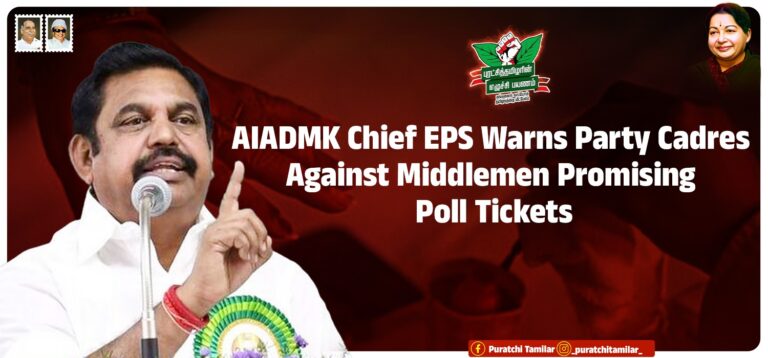
AIADMK Chief EPS Warns Party Cadres Against Middlemen Promising Poll Tickets In a strong and timely message aimed at safeguarding party discipline and integrity, AIADMK general secretary Edappadi K...
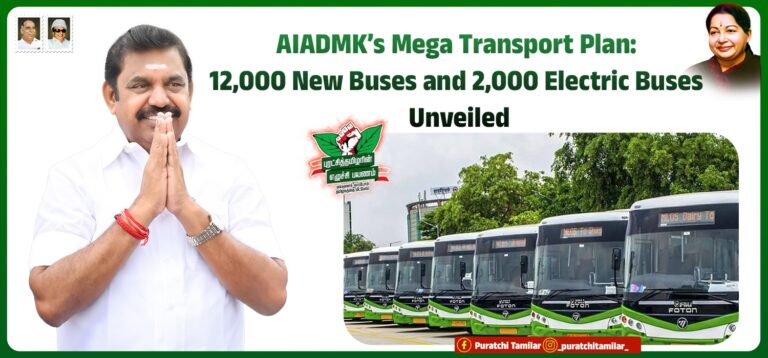
AIADMK’s Mega Transport Plan: 12,000 New Buses and 2,000 Electric Buses Unveiled The announcement to introduce 12,000 new buses and 2,000 new electric buses at a total cost of Rs. 5,890 crore stands...
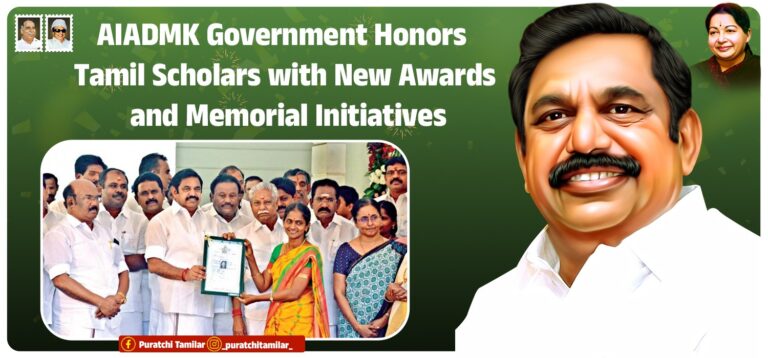
AIADMK Government Honors Tamil Scholars with New Awards and Memorial Initiatives The Tamil language, one of the world’s oldest classical languages, has been shaped and preserved by generations of...
AIADMK Government Allocates ₹100 Crore to Tackle Drinking Water Shortage The release of ₹100 crore from the Disaster Relief Fund to address drinking water shortages stands as a strong example of...
AIADMK Achievements in Focus: 7th Pay Commission Benefits Government Workers The implementation of the 7th Pay Commission stands as a major milestone in strengthening the welfare of government...